
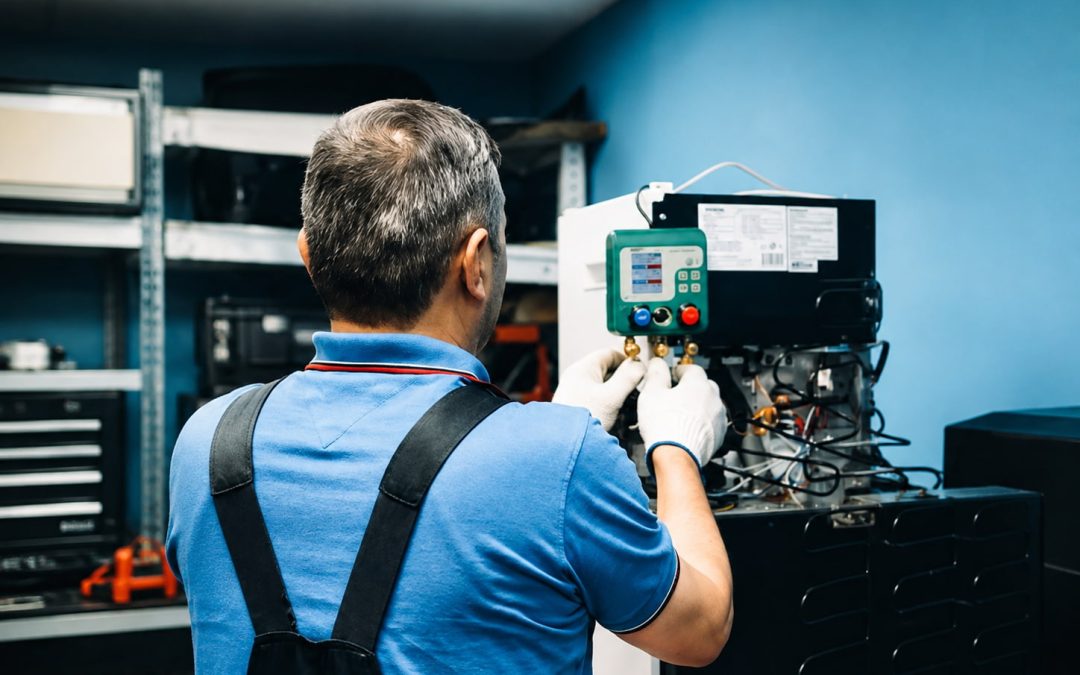
When you schedule an air conditioning repair or heat pump service call in Auburn, the technician who arrives at your door is operating under a federal regulatory framework that governs exactly what they are legally permitted to do with the refrigerant inside your system.
EPA Section 608 of the Clean Air Act is that framework, and understanding what it requires gives South Puget Sound homeowners a concrete basis for evaluating any HVAC contractor before authorizing work on their equipment.
The Four Section 608 Certification Tiers and What Each Covers
Section 608 certification is not a single credential. The EPA divides it into four tiers that reflect the type of equipment a technician is authorized to service, and a qualified contractor’s certification tier determines exactly which systems they can legally work on.
Type I certification covers small appliances — equipment that contains five pounds or less of refrigerant and is fully manufactured and charged at the factory. Window air conditioners and household refrigerators fall into this category. Type II certification covers high-pressure systems, which includes most residential central air conditioning and heat pump equipment.
A technician servicing the split system in a typical Auburn home must hold at minimum a Type II certification. Type III certification covers low-pressure systems such as large centrifugal chillers used in commercial settings. Universal certification covers all three equipment categories and is the credential held by technicians who service the full range of residential and commercial HVAC equipment.
For Auburn homeowners scheduling any refrigerant service, the practical verification question is simple: does the technician hold Type II or Universal Section 608 certification for the residential equipment they’re servicing. The EPA’s Section 608 technician certification program publishes the complete certification tier requirements and approved testing organization list that South Puget Sound homeowners can reference when verifying any contractor’s credentials.
The Venting Prohibition and Certified Recovery Equipment Requirements
The core prohibition at the heart of Section 608 is the venting ban. Under the Clean Air Act, it is illegal for any person to knowingly vent refrigerant into the atmosphere during the maintenance, service, repair, or disposal of HVAC equipment. This applies to all refrigerants currently regulated under Section 608, including R-410A, the refrigerant used in most residential systems installed in Auburn homes over the past fifteen years.
Before opening any refrigerant circuit for service, a certified technician must use EPA-approved recovery equipment to capture the refrigerant from the system. That recovery equipment must itself meet EPA certification standards. Recovery is not optional, and it is not the customer’s responsibility to ask whether it’s being done — it’s a legal requirement the contractor must fulfill on every service call without exception.
A technician who vents refrigerant rather than recovering it is violating federal law, and the liability exposure for that violation does not fall on the homeowner. The EPA’s refrigerant management and recovery equipment requirements document the specific recovery requirements and certified equipment standards that every Auburn HVAC contractor must follow.
Leak Repair Thresholds, Recordkeeping, and Refrigerant Purchase Restrictions
Section 608 establishes leak repair thresholds tied to appliance charge size that create obligations for both contractors and building owners when a system is found to be leaking. For comfort cooling equipment — the category that covers most Auburn residential and light commercial HVAC systems — a leak repair threshold applies when the system has lost a defined percentage of its charge over a twelve-month period. When that threshold is exceeded, the equipment owner is required to either repair the leak within a specified timeframe or retire the equipment.
Contractors who service systems with refrigerant charges above a threshold weight are required to maintain records of the refrigerant added to those systems and report to the EPA when leak rates exceed defined limits. Those recordkeeping and reporting duties create a paper trail that protects both the contractor and the customer by documenting that service was performed in compliance with federal requirements. Beyond leak thresholds and recordkeeping, Section 608 restricts who can purchase refrigerant.
Refrigerants in containers larger than two pounds may only be sold to technicians who hold current Section 608 certification — meaning uncertified individuals cannot legally purchase the refrigerant used in residential HVAC systems. The EPA’s guidance on refrigerant sales restrictions documents the purchase restriction requirements that govern refrigerant supply chains serving Auburn and South Puget Sound HVAC contractors.
What Auburn Homeowners Should Verify Before Any Refrigerant Service
Understanding Section 608’s certification tiers, venting prohibition, recovery requirements, and leak repair obligations gives Auburn and King County homeowners a specific set of questions to ask before authorizing any HVAC refrigerant service. These aren’t difficult questions — a qualified contractor will answer them without hesitation:
- Does the technician hold current EPA Section 608 Type II or Universal certification for the residential equipment being serviced?
- Will the technician use certified recovery equipment before opening the refrigerant circuit on any service or repair call?
- If the system is found to be leaking, will the contractor document the leak rate and advise on repair obligations under Section 608’s leak repair threshold requirements?
- Does the contractor maintain service records documenting refrigerant added to each system — and will they provide the customer with a copy of that documentation?
- Is the contractor purchasing refrigerant through licensed supply channels that verify Section 608 certification at the point of sale?
A contractor who welcomes these questions and answers them with specific, documentable information is one whose compliance posture matches the legal framework Section 608 establishes. The BLS occupational outlook for HVAC technicians reinforces that EPA Section 608 certification has become the baseline professional credential that distinguishes qualified HVAC technicians across the industry.
Auburn HVAC Service From a Team That Knows What Section 608 Requires
Understanding EPA Section 608 gives Auburn and South Puget Sound homeowners a concrete regulatory standard for evaluating any HVAC contractor before authorizing refrigerant service. The certification tiers, venting prohibition, recovery requirements, and recordkeeping obligations are the legal framework that determines what a technician is permitted to do inside your home.
Absolute Heating & Cooling has served Auburn, Tacoma, Federal Way, Puyallup, Sumner, Edgewood, Bonney Lake, and surrounding South Puget Sound communities since 2009 with licensed, bonded, and insured heating and cooling services.
Whether you need gas fireplaces, heat pump service, or furnace repair to restore reliable heating and keep your home comfortable, the team at Absolute Heating & Cooling is ready to help. Book your HVAC appointment today and take the first step toward heating and cooling service you can trust.