
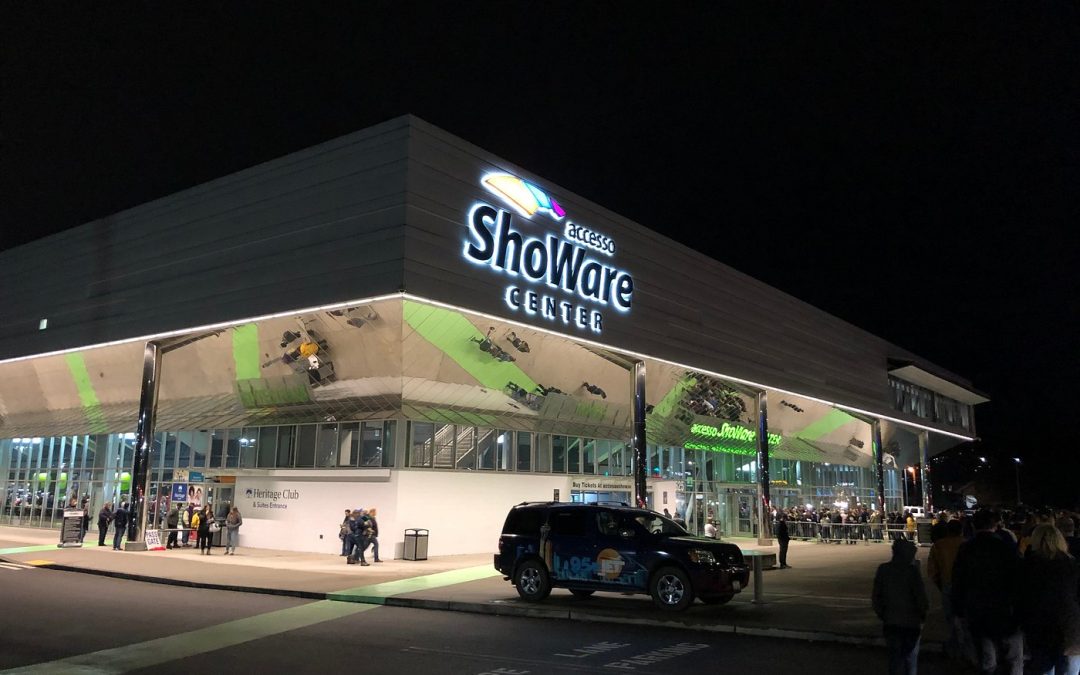
Kent, Washington, sits along the Green River Valley south of Seattle, and its downtown core holds one of King County’s larger multi-purpose arenas. The accesso ShoWare Center anchors what many residents refer to as Kent’s downtown events district, a compact area built around live sports, concerts, and civic gatherings. Understanding the venue’s history and role helps explain why downtown Kent draws thousands of visitors on any given week.
A Landmark in Downtown Kent
The arena sits at 625 W. James Street in downtown Kent, within walking distance of the Kent Sounder commuter rail station and several downtown retail blocks. Sound Transit’s Sounder train service connects this stop to Seattle and Tacoma, which gives out-of-town visitors an easy way to reach the venue without a car.
The City of Kent owns the facility, which opened in January 2009 after a construction cost of roughly $84.5 million. At approximately 150,000 square feet, the building includes a bowl that seats 5,887 fans in its standard configuration, expanding to 7,141 with retractable seating for concerts and larger events.
Its downtown placement was intentional. City planners designed the arena to sit near existing transit, parking, and dining options rather than on Kent’s outskirts, a decision that continues to shape foot traffic patterns downtown. That proximity to transit and retail is a major reason the surrounding blocks function as a recognizable events district today.
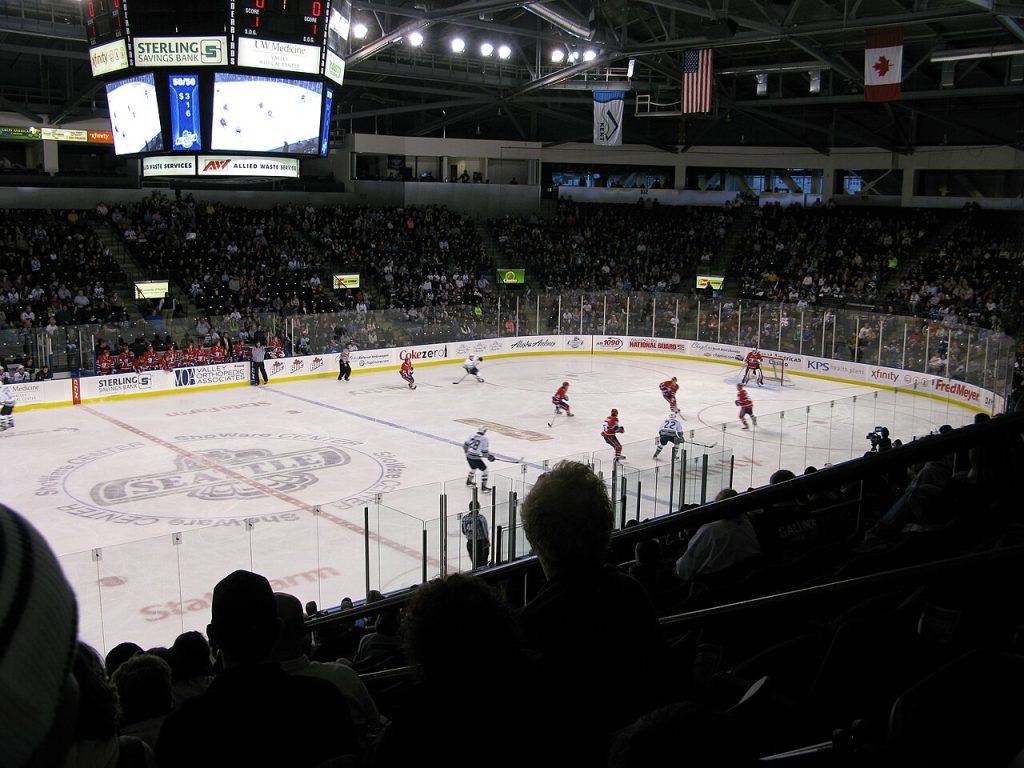
Image credit: Temescal, CC BY-SA 3.0, via Wikimedia Commons

From Kent Events Center to a Regional Entertainment Hub
Before construction finished, the project carried the working title “Kent Events Center.” Naming rights briefly went to a software company called Amiga, Inc., but that deal collapsed before opening day, and the venue instead became known as the ShoWare Center starting in 2009. In 2017, following a corporate acquisition, the facility adopted its current name, accesso ShoWare Center.
The arena has undergone several renovation phases since opening, including a multimillion-dollar upgrade completed in the early 2020s that replaced the scoreboard, ice-making equipment, and concession infrastructure. ASM Global, a firm that manages public assembly venues across the country, operates the building on the city’s behalf. These updates have kept the arena competitive with newer regional venues while preserving its role as a downtown Kent fixture.
What Happens Inside: Tenants, Sports, and Concerts
The arena’s event calendar reflects its “multi-purpose” design, meaning it converts between an ice rink, a soccer pitch, and a concert stage depending on the week. Two professional sports franchises use the building as a home venue, and it also hosts a steady stream of touring concerts, family shows, and community events.
- The Seattle Thunderbirds of the Western Hockey League play roughly 40 home games there each season.
- The Tacoma Stars of the Major Arena Soccer League also use the facility for indoor soccer matches.
- The venue has hosted an NHL preseason game, professional wrestling broadcasts, and touring musical acts across genres.
- On average, the arena hosts between 110 and 117 events annually, according to the venue’s own published event history documented on Wikipedia.
This mix of tenants means the building rarely sits empty for long, which keeps downtown Kent’s events district active in every season rather than just during peak sports schedules.
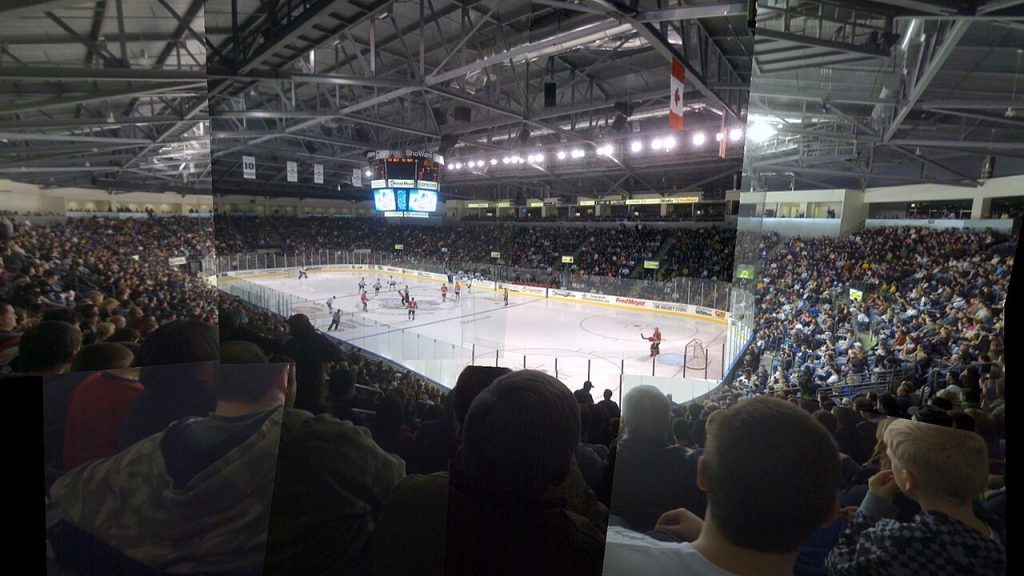
Image credit: hobvias sudoneighm from Seattle, United States of America, CC BY 2.0, via Wikimedia Commons

How the Arena Shapes Downtown Kent’s Events District
An arena of this size functions as more than a single building; it becomes a gathering point that influences the streets around it. On event nights, nearby restaurants, parking facilities, and the adjacent Sounder station all see increased use, which is a common pattern in cities that place arenas within walking distance of a downtown core. Kent’s approach mirrors a broader trend among mid-sized cities that use a single large venue to anchor a walkable entertainment district rather than isolating it in a suburban lot.
For property owners and businesses near the arena, this steady flow of visitors creates a distinct commercial rhythm tied to the venue’s schedule. Understanding when major events occur, and how many people they draw, helps explain seasonal shifts in downtown foot traffic that residents notice throughout the year.
Climate Considerations for a Year-Round Indoor Venue
Kent sits in the Puget Sound lowlands, a region defined by mild, wet winters and comparatively dry, moderate summers. Because the arena operates year-round regardless of outside conditions, its indoor systems have to manage a wide range of humidity and temperature swings, from damp winter air that calls for reliable heating equipment to warmer, drier stretches in July and August that increase demand on cooling systems. Large assembly buildings like this one rely on mechanical ventilation, not open windows, to keep air quality consistent for thousands of attendees at once.
Public venues of this size generally follow ventilation guidance from organizations such as ASHRAE, a technical society that publishes widely used standards for indoor air quality in large assembly spaces. These standards address how much fresh air a building must circulate per occupant, an amount typically managed through automated climate controls that adjust airflow as crowd size changes throughout an event.
For a region where outdoor humidity and temperature can shift significantly within a single day, that kind of consistent indoor climate management is part of what allows a facility like this to operate safely and comfortably across all four seasons.